What is Right-of-Way Clearing and how does it work?
Right-of-way clearing is the removal of trees, brush, and overgrowth along utility lines, roads, and drainage ditches. In Mobile, it keeps power lines safe during hurricanes and prevents flooding from blocked drains.
Think of a right-of-way as a strip of land the utility company or the city has permission to access. It usually runs along the edge of your property, often 10 to 20 feet wide on each side of a power line or road. The goal is to keep that strip free of tall trees, thick vines, and heavy brush that can cause problems.
In Mobile, the main reason for right-of-way clearing is storm prep. A single hurricane can snap a pine tree and take out a whole block's power. Clearing that corridor means the wind can blow through without grabbing a tree limb and yanking the line down. It also lets utility crews get to poles and transformers quickly after a storm.
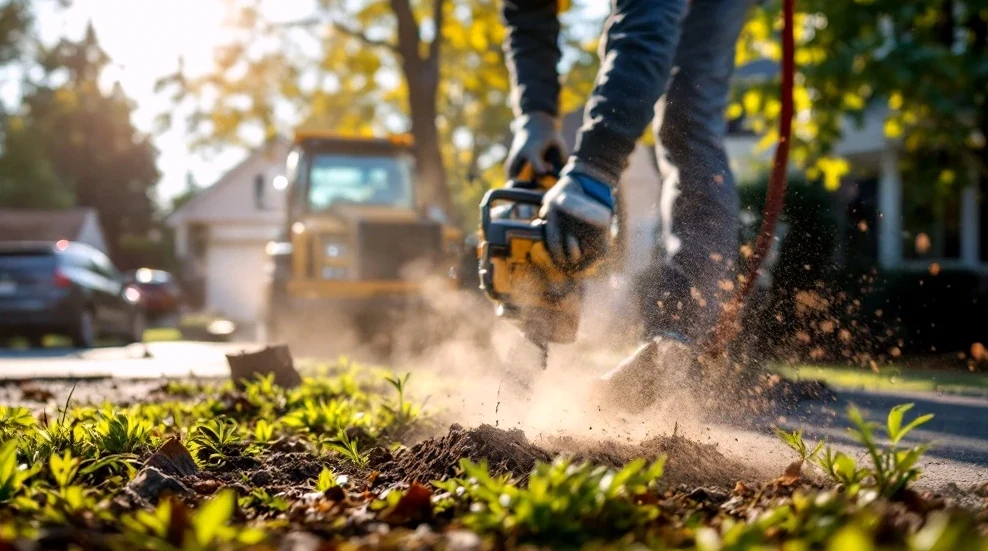
The work itself is different from general brush clearing. A crew might use chainsaws, brush mowers, or even heavy equipment like skid steers to grind stumps and flatten thickets. They do not just trim around your house. They clear a defined path, often cutting everything back to the ground or to a safe height, and they haul away the debris.
Most homeowners do not own the right-of-way. It is an easement on your deed. That means the utility or the city has the legal right to clear it, but they do not always do it on your schedule. If you let it go, you risk the overgrowth causing damage to your property or your neighbor's.
How Right-of-Way Clearing works, step by step
A crew first marks the boundary of the right-of-way, then cuts and removes all vegetation within that zone. Stumps are ground, debris is hauled, and the area is graded if needed. The whole job can take one to three days depending on the length and density.
Step one is marking the lines. The crew walks the property with a map or GPS to confirm exactly where the easement runs. They spray paint flags on trees or set stakes so everyone knows what stays and what goes. This keeps you from losing a prized camellia that sits just outside the boundary.
Next comes the heavy cutting. For small brush and vines, a skid steer with a brush cutter attachment can clear a 100-foot stretch in under an hour. For larger trees, a climber goes up with a chainsaw and drops limbs in sections. They work from the utility line outward, so nothing falls on the wire.
After everything is down, the crew grinds the stumps to below grade. This is critical in Mobile. Leftover stumps rot and attract termites, and they can push up through the ground and trip mowers. Grinding them six inches down stops regrowth and keeps the area clean.
Debris removal is the messy part. The crew loads logs, branches, and brush into a dump trailer or truck. Some outfits chip the material on site, but most haul it to a local yard. You do not want piles left behind. Wet brush rots and becomes a mosquito breeding ground, and nobody in Mobile needs more mosquitoes.
Finally, they grade the soil smooth. If the clearing exposed a ditch or low spot, they might bring in a few yards of dirt to level it out. Then they seed it with grass or leave it bare. Bare ground is fine for a utility corridor, but if it is near your driveway, ask them to seed it so you do not get mud tracked into your car.
Why Right-of-Way Clearing matters for your home
Clearing the right-of-way protects your home from storm damage, prevents flooding, and keeps your power on. In Mobile, overgrown easements are a leading cause of extended outages after hurricanes.
When a hurricane or tropical storm hits Mobile Bay, the wind comes from the south and funnels up the rivers. A tall pine leaning over a power line acts like a lever. The wind pushes the tree, the tree pushes the line, and the line snaps. Clearing that corridor removes the lever.
Flooding is another big one. Mobile gets 66 inches of rain a year, and most of it falls in summer thunderstorms. If the drainage ditch along your right-of-way is choked with privet and kudzu, water backs up into your yard and can creep toward your foundation. Clearing the ditch lets water flow to the bayou.
Fire safety matters. Dry brush along a power line can ignite if a wire arcs during a storm. In the summer of 2023, a downed line near Three Mile Creek started a brush fire that took two fire crews to put out. Keeping that strip clear reduces the chance of a spark turning into a blaze.
There is a practical side for you as a homeowner. If the right-of-way is overgrown, you cannot mow it, you cannot see the property line, and you might not notice a broken fence or a leaking pipe until it is too late. A cleared easement gives you a clean view of your whole lot.
Common problems and what causes them
The biggest problems are neglected easements that cause outages, blocked drainage that floods yards, and homeowners who plant the wrong trees in the right-of-way. Each issue has a straightforward fix if caught early.
Neglect is the most common issue. A homeowner buys a house and does not realize the back 15 feet of the lot is an easement. Five years later, sweetgums and hackberries are 30 feet tall and touching the primary line. One thunderstorm and the whole street goes dark. The fix is a one-time clearing, then annual maintenance.
Blocked drainage is a close second. Mobile's soil is mostly sandy loam, which drains well, but if the ditch is full of privet and blackberry brambles, water has nowhere to go. After a three-inch rain, the ditch overflows and the water sits in your yard. Clearing the ditch and regrading the low spots solves it.
Planting the wrong trees is a mistake you see all the time. People plant live oaks or crepe myrtles right on the easement line because they want shade. A live oak can have a 60-foot canopy. That tree will eventually hit the power line, and the utility will cut it down, not trim it. You lose the tree and pay for removal.
Another problem is regrowth. Kudzu can grow a foot a day in July. If you clear an easement in spring and do not touch it again, by August it looks like a jungle. The answer is a follow-up treatment with herbicide on the stumps, or a mow every six weeks during growing season.
Common questions about Right-of-Way Clearing
Need brush clearing in Mobile? Get a free estimate today.
📞 256-952-8617