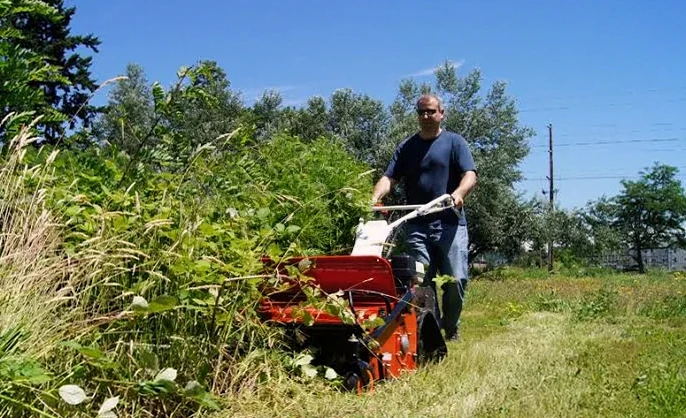
How does Brush Clearing work?
Brush clearing is the process of cutting, removing, or mulching overgrown vegetation like vines, saplings, briars, and scrub trees from a property. In Mobile, that usually means dealing with kudzu, privet, poison ivy, and volunteer pines that have taken over a lot or backyard.
A crew shows up with equipment sized to the job. For a small lot, that might be a walk-behind brush cutter and a couple of rakes. For a few acres, it's a skid steer with a mulching head or a tractor with a rotary cutter. The crew first walks the property to spot hazards: old fence wire hidden in the brush, a stump you can't see, a low-hanging power line. They flag those spots before any blade hits the ground.
The actual clearing happens in layers. They knock down the tall stuff first, usually saplings and privet thickets, working from the outside of the property inward. Then they go back over the same area with a smaller machine or hand tools to get the low vines and briars. In Mobile, where kudzu can cover a whole shed in one season, they often have to cut and then wait a day for the vines to wilt before they can see what's underneath.
After the cutting, the debris has to go somewhere. Some jobs are 'cut and pile,' where the crew stacks the brush in a burn pile or a spot for the city to pick up. Others are 'cut and mulch,' where a grinder turns everything into wood chips that get spread back on the ground. In Mobile city limits, open burning is restricted, so most residential jobs end up as mulch or hauled away.
The final step is cleanup. A good crew rakes the area, picks up any trash that was hidden in the brush, and leaves the property looking like a park, not a war zone. They should also check the property line so they don't accidentally clear your neighbor's lot.
Step-by-step: what to expect
From the first phone call to the last rake pass, here is what a typical brush clearing job in Mobile looks like. The process has five main stages: the initial walkthrough, marking hazards, the cutting pass, debris handling, and final cleanup.
First, you call a company and describe what you have. Be honest about the size and the density. Saying 'a little overgrown' when you have a wall of bamboo 20 feet tall just wastes everyone's time. A good estimator will ask you to send photos or do a video call. They want to see the terrain, the access points, and whether there's a gate that a skid steer can fit through.
On the day of the job, the crew arrives and does a safety walk. They look for things you might not think about: a buried irrigation line, a septic tank lid, a stump with a big nail in it. In Mobile, we have a lot of old farm properties where barbed wire is rusted and invisible in the grass. The crew marks those spots with flags or spray paint. This walk takes 15 to 30 minutes for a typical residential lot.
Then the cutting begins. For a half-acre lot with moderate brush, a two-man crew with a brush cutter and a chainsaw can finish the cutting in about four hours. Thicker stuff, like a stand of Chinese privet or a patch of bamboo, takes longer because the crew has to stop and sharpen blades more often. Bamboo is especially hard on equipment; it dulls a chainsaw chain in minutes.
Debris handling is where a lot of homeowners get surprised. If the crew is piling the brush, they need a place to put it that's accessible and not too close to the house or a fence. A pile for a half-acre lot can be 15 feet across and 8 feet tall. If you want it hauled away, that means dump truck loads. A typical residential lot generates two to four truckloads of brush, sometimes more.
The final cleanup is more than just raking. The crew should go over the area with a magnet sweeper if there was old wire or fencing. They should also check for any poison ivy or poison oak that got cut and left behind. In Mobile, poison ivy grows as a vine up trees, and the oil stays active on dead vines for years. A responsible crew will bag that separately and not put it in the mulch pile.
How long does Brush Clearing take?
For a typical residential lot in Mobile, a brush clearing job takes one to three days. A small lot with light brush might be done in a single day. A larger lot with heavy kudzu or bamboo can take a full week.
The biggest factor is the density of the vegetation, not the size of the lot. A half-acre that's been mowed every year is a morning job. The same half-acre that has sat untouched for five years with volunteer pines and privet is a two-day job. The crew has to cut, then drag, then cut again because the light can't reach the ground level until the canopy is opened up.
Weather in Mobile matters a lot. If the ground is wet from a hurricane or a week of summer thunderstorms, a skid steer will tear up the yard. The crew may have to wait for the ground to dry out, or they'll work with hand tools only, which doubles the time. Late summer is the worst because the heat and humidity slow everyone down. A crew that works from 7 a.m. to 3 p.m. in March might only work from 7 to 11 in August.
Access also dictates the timeline. If the crew can drive a machine right to the brush, they can clear it fast. If they have to carry everything by hand through a narrow gate or down a steep slope, the job slows way down. Properties in the Mobile Bay area with waterfront lots often have steep banks that require rope work and hand carrying. That can add a full day to a small job.
Permits and neighbors can add delays too. If the job is near a property line, the crew might need to stop and wait for a surveyor to mark the boundary. If the brush is on a drainage easement, the city may require a permit before any clearing happens. A good company will check for these things before they start, but they can still slow things down.
Common questions about the Brush Clearing process
- Q: Do I need to be home during the clearing?
- A: You don't have to be there the whole time, but you should be there when the crew arrives to walk the property and point out any buried lines, septic tanks, or property corners. After that, you can leave if you trust the crew. Most companies will call you when they're done so you can inspect the work.
- Q: What happens to all the brush?
- A: It depends on what you agree to. Some companies include hauling in the price. Others charge extra. If they pile it, you need to figure out what to do with it. In Mobile, you can't just burn it in the city. You can have it chipped, hauled away, or left as a wildlife pile if you have room.
- Q: Will brush clearing kill the roots?
- A: Cutting the brush down does not kill the roots. Most woody plants will resprout. To prevent regrowth, you need to treat the stumps with herbicide or have the crew grind them out. If you just want it cleared for one season and don't care about regrowth, cutting is fine.
- Q: How do I know if the crew is insured?
- A: Ask for a certificate of insurance before they start. It should show general liability and workers' comp. If they don't have workers' comp and someone gets hurt on your property, you could be liable. Any legitimate company will send you the certificate by email.
- Q: What about snakes and wildlife?
- A: Yes, you will stir up snakes. Mobile has copperheads, cottonmouths, and rattlesnakes in brushy areas. A good crew wears snake boots and knows how to move a snake without killing it. Most snakes will leave on their own once the brush is gone.
- Q: Can you clear brush on a steep slope?
- A: Yes, but it costs more and takes longer. Steep slopes require hand work or specialized equipment like a tracked machine. The crew may also need to use ropes for safety. Expect the job to take twice as long as flat ground.
- Q: Will clearing the brush damage my lawn?
- A: If the ground is dry, a skid steer will leave ruts. A good operator can minimize the damage, but some tracks are inevitable. Most crews will come back after the job to smooth out any ruts and reseed if you want.
- Q: How far in advance do I need to book?
- A: In spring and fall, which are the busy seasons in Mobile, you should book two to four weeks ahead. In summer, you might get in within a week. Winter is usually wide open, but the ground can be wet.
- Q: Do I need a permit to clear brush in Mobile?
- A: It depends. If the property is in a flood zone or near a wetland, you may need a city or county permit. If you're just clearing your backyard, you usually don't. Your contractor should know the local rules.
- Q: What's the difference between brush clearing and land clearing?
- A: Brush clearing deals with vegetation under about 4 inches in diameter. Land clearing involves larger trees and stumps. Some companies do both, but brush clearing is lighter work and costs less per acre.
Frequently Asked Questions
Do I need to be home during the clearing?
You don't have to be there the whole time, but you should be there when the crew arrives to walk the property and point out any buried lines, septic tanks, or property corners. After that, you can leave if you trust the crew. Most companies will call you when they're done so you can inspect the work.
What happens to all the brush?
It depends on what you agree to. Some companies include hauling in the price. Others charge extra. If they pile it, you need to figure out what to do with it. In Mobile, you can't just burn it in the city. You can have it chipped, hauled away, or left as a wildlife pile if you have room.
Will brush clearing kill the roots?
Cutting the brush down does not kill the roots. Most woody plants will resprout. To prevent regrowth, you need to treat the stumps with herbicide or have the crew grind them out. If you just want it cleared for one season and don't care about regrowth, cutting is fine.
How do I know if the crew is insured?
Ask for a certificate of insurance before they start. It should show general liability and workers' comp. If they don't have workers' comp and someone gets hurt on your property, you could be liable. Any legitimate company will send you the certificate by email.
What about snakes and wildlife?
Yes, you will stir up snakes. Mobile has copperheads, cottonmouths, and rattlesnakes in brushy areas. A good crew wears snake boots and knows how to move a snake without killing it. Most snakes will leave on their own once the brush is gone.
Can you clear brush on a steep slope?
Yes, but it costs more and takes longer. Steep slopes require hand work or specialized equipment like a tracked machine. The crew may also need to use ropes for safety. Expect the job to take twice as long as flat ground.
Will clearing the brush damage my lawn?
If the ground is dry, a skid steer will leave ruts. A good operator can minimize the damage, but some tracks are inevitable. Most crews will come back after the job to smooth out any ruts and reseed if you want.
How far in advance do I need to book?
In spring and fall, which are the busy seasons in Mobile, you should book two to four weeks ahead. In summer, you might get in within a week. Winter is usually wide open, but the ground can be wet.
Do I need a permit to clear brush in Mobile?
It depends. If the property is in a flood zone or near a wetland, you may need a city or county permit. If you're just clearing your backyard, you usually don't. Your contractor should know the local rules.
What's the difference between brush clearing and land clearing?
Brush clearing deals with vegetation under about 4 inches in diameter. Land clearing involves larger trees and stumps. Some companies do both, but brush clearing is lighter work and costs less per acre.
Need brush clearing in Mobile? Get a free estimate today.
📞 256-952-8617